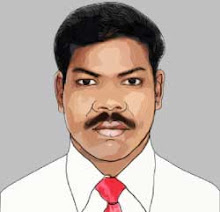
DR SHANKAR ACHARYA, FORMER CHIEF ECONOMIC ADVISOR
The Business Line
Economics and its history have been a limelight of economists and historians. Few economists made attempt to discover something which can be a constant action in everywhere irrespective of location but at the end nobody did to happen yet because unlike physics we are in social science. But is that the economists wanted to see economics as science like physics? Or something else they were trying to look at and say.
There is an interesting article by T. C. A. Srinivasa-Raghavan on economics as he has been trying to understand where the subject stands and how it looks now.
And he quotes economist Mr Solow which is more interesting than his narrative.
The following is excerpts from a article published by Robert M. Solow in The American Economic Review, Vol. 75, No. 2, (May, 1985), pp. 328-331.
T. C. A. Srinivasa-Raghavan is trained from Delhi School of Economics and he has lots of friends still over there. He says in his column in Business Line which is something interesting and questioning his friend’s works perhaps his own works also!
Take his recent column in which he says “...this is very much the case with the demand for economics courses. The best and the brightest, 90 per cent of the time, go off into the pure sciences, mathematics, and engineering. Those who can’t make it into these courses, often end up in economics.
As more students pass out of schools, and the number of seats in the pure sciences, mathematics, and engineering grows only slowly, there is a natural increase in the demand for economics. This much is simple”.
Of course seldom people takes serious about the advancement of any subject, like the one now is economics on which T C A has been dewing for quite some time. And I have been taking note it. Because the only reason which I employ is ‘open mind’.
To be precise for me it is not only interesting to read the questioning style of his writings but the way he puts things in unfolding ideas of economics.
“Sure, there are nonsense in his writings may be occasionally” as my friend Jayakamal use to describe.
T C A has been questioning the whole body of economics development since 1970s. His focuses has also shifted from macro economics to other area as he writes in recent column “Through clever research funding economists were persuaded to ask questions that had not only been already asked and answered but also which had no real answers. Growth theory and development economics are excellent examples of this but almost all of economics is like this.”
T. C. A. SRINIVASA-RAGHAVAN asks perhaps good question “Why is it that if
At least it is not surprising me when he says "approach to something" and “they will land you in trouble” when ourselves prepared to land in trouble like the one ‘socialism’.
In the morning I read three articles the subject of article vary from financial crisis to urbanization and false theory of economists.
First, in today’s ET Joseph E. Stiglitz has article in which he says that “Trickle-down economics almost never works” it comes after doing a significant damage which the present academic community fails to understand and give up the theory.
Second, fight over whether macroeconomics was advanced or not after 1970s. Typically T. C. A. Srinivasa-Raghavan says by quoting Keynes who said in 1931 that “If economists could manage to get themselves thought of as humble, competent people on a level with dentists that would be splendid.”
And “he is also intensely critical of the tendency introduced by engineers-turned-economists to look on the real world as a sort of machine where pressing the right buttons leads to predicable outcomes.”
T. C. A. Srinivasa-Raghavan earlier criticized Raghuram Rajan report on financial sector reform saying “unfortunately, and thanks in a large measure to the data boys, especially those with engineering backgrounds, this has become a generalised problem in macroeconomic analysis and policy wonking. So even though they pour scorn on anecdotal evidence, the data boys have become guilty of the same methodological flaw. They confuse correlation with causality and use induction and deduction inter-changeably.”
Third, in
Almost, Mr TCA become a bogus analyst with horrified mind said a friend of mine.
Well, if any one I wanted to call notorious in the analysis of Indian economy it will be “Cornell economist Kaushik Basu”.
Mr Basu said in his Sage - Madras School of Economics Endowment Lecture (2007) “one undeniable factor is that
Nonetheless, the question is important Mr. Basu “once asked why everyone held an opinion on economics but not on aircraft design. He was arguing that economics was a specialisation requiring technical skills that were no less rigorous than those required of an aircraft designer”.
Some time back Mr TCA seems to be good analyst of economics and politics but now I realised that he also misdirected his readers. He simply scraped the
No doubt, I agree with at least this point that “It was that if you got the market design right, the danger of market failure was almost nil. This assumption led to the influx of engineers, scientists and physicists into a domain that superficially looked like their own but contained, alas, humans also, with all their foibles”.
No matter how many business analysts, journalist, and other “…..harking back to Keynes now but nowhere did he say that the taxpayers should pay the price of private folly and greed via bailouts What he said was governments should buy goods and services when private demand fell short of what installed capacity could provide. He was treating a different problem, namely, the survival of the poor, not of the rich”.
Our academicians including the economics departments of Indian universities are in deep sleep. They cannot back to Keynes nor look forward to Hayek or anyone else.
It is no less folly to blame only “private folly and greed via bailouts”. Election after election, schemes after schemes, law after law, Acts after Acts, rules after rules, etc goes with publically announced “bailouts” in the name of “poor” without mining whether it reaches or not.
What remains a big mess is the Constitution of India which becomes focal point for everyone to speak but not to adhere, morally, mentally and physically and be responsible when get elected by people of this country.
T. C. A. prescriptions for healing economy:
This kind thinking has already implemented in the six pay commission by embossing the informal sector where the majority of people dwells.
Just is the growth rate of different sector in the Q3 (October-December) 2008-09. The manufacturing and agriculture and allied sectors were shown negative growth but the community, social, and personal services were shown as high as 17.3%!
Of course, people who are in the formal sector will defiantly do “orders for steel, cement, computers, software, trucks, cars”…..etc.
T. C. A. Srinivasa-Raghavan asks how the causality function? And “f, say, the demand curve for something shifts upwards, how do you know which of the following caused it: an upward shift in per capita incomes, a change in tastes and preferences, or simply a generational change?
T. C. A. SRINIVASA-RAGHAVAN writes, but rather old jokes of government politics and RBI politics. While the first para may include his part also.
“One only has to look at the financial newspapers (and columns by a few misguided economists with a touching faith in the markets even after they have so visibly and disastrously failed after the Lehman disaster) until mid-January to see how not just the Finance Ministry but also its pet economists had been behaving like those fellows who fire guns in the air during North Indian marriage festivities. It was triumphalism, pure and simple.
Indeed, in November one very senior government functionary had even said to me, with a chuckle of deep satisfaction, that the RBI now had to take the Government’s permission even to go to the toilet. He had been having a running battle with the RBI — which he had mostly lost — for the last four years. So I suppose his glee was in some senses understandable.
Only a few days after the current Governor took over in the first week of September, one member of the RBI’s top echelon had made it clear to the then Finance Minister that some of the statements he was making, especially in regard to the health of Indian banks, were uncalled for. He was ignored. The Finance Ministry also set up the liquidity committee — or some such creature — that it wanted to control. The snub to the RBI could not have been more public or more direct. The message to it was that it should either move or get out of the way — shape up or ship out. In the event, the committee met once or twice and then faded away. But the damage had been done.
Another step was the series of meetings that the Finance Minister called with economists who had never run policy but who had opinions on everything under the sun.
There were several directors of think tanks in this group and even one or two traders present during the meetings. Everyone was unanimous that the RBI was the problem, not the solution.
Our political and intellectual leaders can sometimes behave extremely foolishly and this anti-RBI episode is a good example of that”.

T. C. A. Srinivasa-Raghavan writes in the Business Line but quite interesting in questioning the basics of economics which is often said as 'dismal science' nothing more on it in a rational way at least in the modern times. Note the following thought which has gone through years at least in his mind.
“As mentioned last week the purpose of this column is to suggest that economists no longer quite know what they are doing as a result of which economics has lost its way. This is proposed to be done with the help of examples from the research in economics.
Assumptions are central to any discipline of structured thought. Newspapers, for example, assume that readers are only interested in reading news but not reading per se. Psychologists assume that everyone is nuts unless proven otherwise. Historians assume that the historical material they use is true. And so on.
Economics differs in one very important respect. It makes more assumptions than any other discipline. One of these is (or used to be) that people and societies act rationally, where rationality consists mostly of consistency.
But after more than a century of using this assumption as a bedrock of their theories economists have now begun to abandon it in order to justify the discipline’s inability to come up with explanations that stand the test of time.
They are not saying that people don’t behave rationally but only that there can be no standard yardstick by which to judge an action as rational.
Thus, even though suicide bombing is regarded as completely irrational behaviour, to the bomber himself it appears to be the most rational thing to do.
I might add that whether or not that is the case, suicide bombers certainly take care of one of the most used definitions of rationality in economics, attributed to John Muth of
His definition was simple: people don’t make the same mistake twice. With suicide bombers, of course, we never get the chance to find out if this is true.
The question that needs asking but which no one is asking is: by diluting the rationality requirement, has the subject gained or lost? Having thought about it a lot during the last two decades, I would say that one way or another, it has not made any difference.
Therein lies the real tragedy of modern economics”.
T.C.A. Srinivasa-Raghavan just started column titled ‘Empty Sum’ The Business Line Newspaper. He writes in his first piece:
These are good questions actually but bad time to ask for action.
T. C. A. SRINIVASA-RAGHAVAN writes “After all, why should a taxpayer be made to pay for the mistakes of some bad decisions by directors? Even if there was a genuine error of judgment about the likely business environment, why should the cost of helping them out fall on the taxpayer when he or she was not sharing the benefits when the times were good?
True, a person could have become a shareholder, but that would have meant exercising a choice, which is right. But now taxpayers are not being allowed to do so. Whether they like it or not, their money is being given away to small groups of persons, some of whom may well have avoided or evaded taxes and, thus, become richer than those who paid their taxes”.
Except the above questions all other questions the author asked in the article was clear in the public debate.

T. C. A. Srinivasa-Raghavan writes about Chacha Manmohan Singh and Amartya Sen “the two men share a quality that is absolutely central to their success but which, at the same time, makes it hard to form anything but a very blurred image of them and which makes them all things to all men”.
T. C. A. Srinivasa-Raghavan writing is always s mixed veg curry one could taste in different way. Is all that good to tease one’s actions when he comes to public office? Here are few lines from his recent article in the Business Line.
May be good question but never be a wrong time.