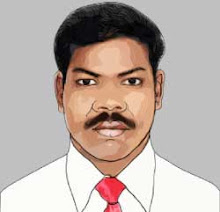
Thomas Sowell is a great living free market economist, who never hesitated, to argue his heart felt strong ideas that are not only radical in nature but also intellectual with lucid in character. I read hundred’s of his articles and some of his videos also.
The most recent one is such a great article. I have just collocated all his comments posted for this article, really it
is interesting,
The Economics of CollegeBy Thomas SowellTuesday, April 22, 2008
A front-page headline in the New York Times captures much of the economic confusion of our time: "Fewer Options Open to Pay for Costs of College."
The whole article is about the increased costs of college, the difficulties parents have in paying those costs, and the difficulties that both students and parents have in trying to borrow the money needed when their current incomes will not cover college costs.
All that is fine for a purely "human interest" story. But making economic policies on the basis of human interest stories -- which is what politicians increasingly do, especially in election years -- has a big down side for those people who do not happen to be in the categories chosen to write human interest stories about.
The general thrust of human interest stories about people with economic problems, whether they are college students or people faced with mortgage foreclosures, is that the government ought to come to their rescue, presumably because the government has so much money and these individuals have so little.
Like most "deep pockets," however, the government's deep pockets come from vast numbers of people with much shallower pockets. In many cases, the average taxpayer has lower income than the people on whom the government lavishes its financial favors.
Costs are not just things for government to help people to pay. Costs are telling us something that is dangerous to ignore.
The inadequacy of resources to produce everything that everyone wants is the fundamental fact of life in every economy -- capitalist, socialist or feudal. This means that the real cost of anything consists of all the other things that could have been produced with those same resources.
Building a bridge means using up resources that could have been used building homes or a hospital. Going to college means using up vast amounts of resources that could be used for all sorts of other things.
Prices force people to economize. Subsidizing prices enables people to take more resources away from other uses without having to weigh the real cost.
Without market prices that convey the real costs of resources denied to alternative users, people waste.
That was the basic reason why Soviet industries used more electricity than American industries to produce a smaller output than American industries produced. That is why they used more steel and cement to produce less than Japan or Germany produced when making things that required steel and cement.
When you pay the full cost -- that is, the full value of the resources in alternative uses -- you tend to economize. When you pay less than that, you tend to waste.
Whether someone goes to college at all, what kind of college, and whether they remain on campus to do postgraduate work, are all questions about how much of the resources that other people want are to be taken away and used by those on whom we have arbitrarily focused in human interest stories.
This is not just a question about robbing Peter to pay Paul. The whole society's standard of living is lower when resources are shifted from higher valued uses to lower valued uses and wasted by those who are subsidized or otherwise allowed to pay less.
The fact that the Soviet economic system allowed industries to use resources wastefully meant that the price was paid not in money but in a far lower standard of living for the Soviet people than the available technology and resources were capable of producing.
The Soviet Union was one of the world's most richly endowed nations in natural resources -- if not the most richly endowed. Yet many of its people lived almost as if they were in the Third World.
How many people would go to college if they had to pay the real cost of all the resources taken from other parts of the economy? Probably a lot fewer people.
Moreover, when paying their own money, there would probably not be nearly as many people parting with hard cash to study feel-good subjects with rap sessions instead of serious study.
There would probably be fewer people lingering on campus for the social scene or as a refuge from adult responsibilities in the real world.
Thomas Sowell is a senior fellow at the Hoover Institute and author of
Basic Economics: A Citizen's Guide to the Economy.
The full comments here